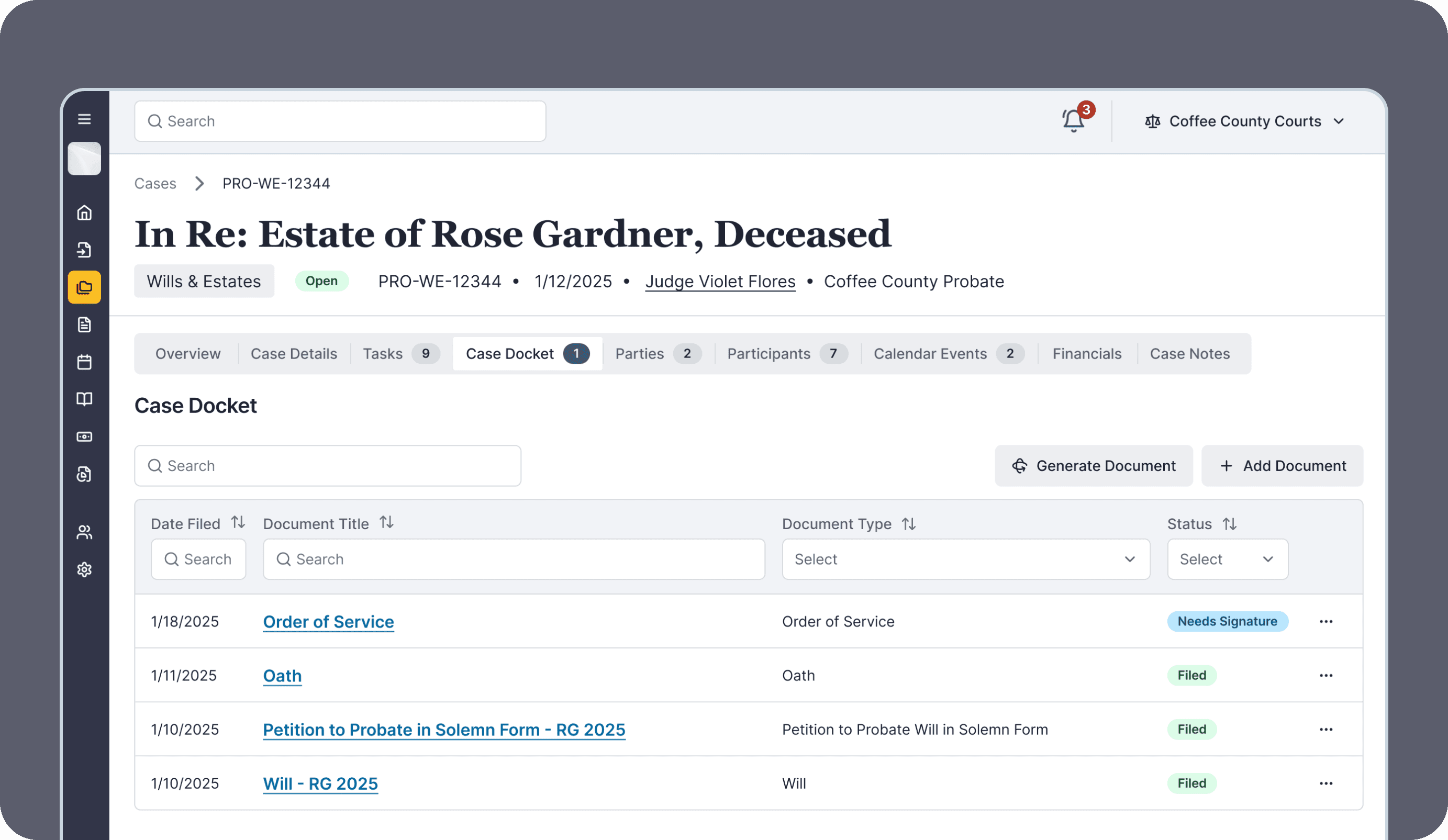
The State of Georgia has 159 counties, therefore even more hundreds of different courts. Currently, these courts are using various Case Management System (CMS) platforms - leading to disjointed data and reporting. Our team at Slalom partnered with AWS to create a centralized CMS for Georgia in order to improve court experiences and make the state a more safe and just place:
Streamlines process and knowledge sharing across courts
Improved reporting and analytics that will identify trends and help decision-makers allocate resources to the right places
I’ve been on this project since January 2025, where I started as the UX Lead for the Probate Court. Alongside a Product Owner, during the discovery phase we worked together to plan and facilitate research and focus group sessions with 2 different counties that would help us fuel our backlog of requirements.
Now, I'm leading the Case Management & Document/eFiling Management domains - defining product direction and producing end-to-end user flows that address clerk and judge pain points.
We are also using Kiro, AWS's agentic AI-powered Integrated Development Environment (IDE)! Through Kiro, I've been able to take ideas straight into code by building coded prototypes that speed up requirement gathering and production.
As of December 29, 2025, we officially launched the initial release of the Georgia Court Case Management System. With this milestone includes onboarding kickoff for 27 courts, across 4 classes of courts.
Learn more on the GCMS's information site.
Phase 1: Discovery
The first 12 weeks of the project was the "Discovery" phase, where our team set forth to uncover what the problems were in order to design the right solution. We conversed with State, Superior, Accountability, Magistrate, and Probate Courts - I was specifically involved as the Probate Court Experience lead.

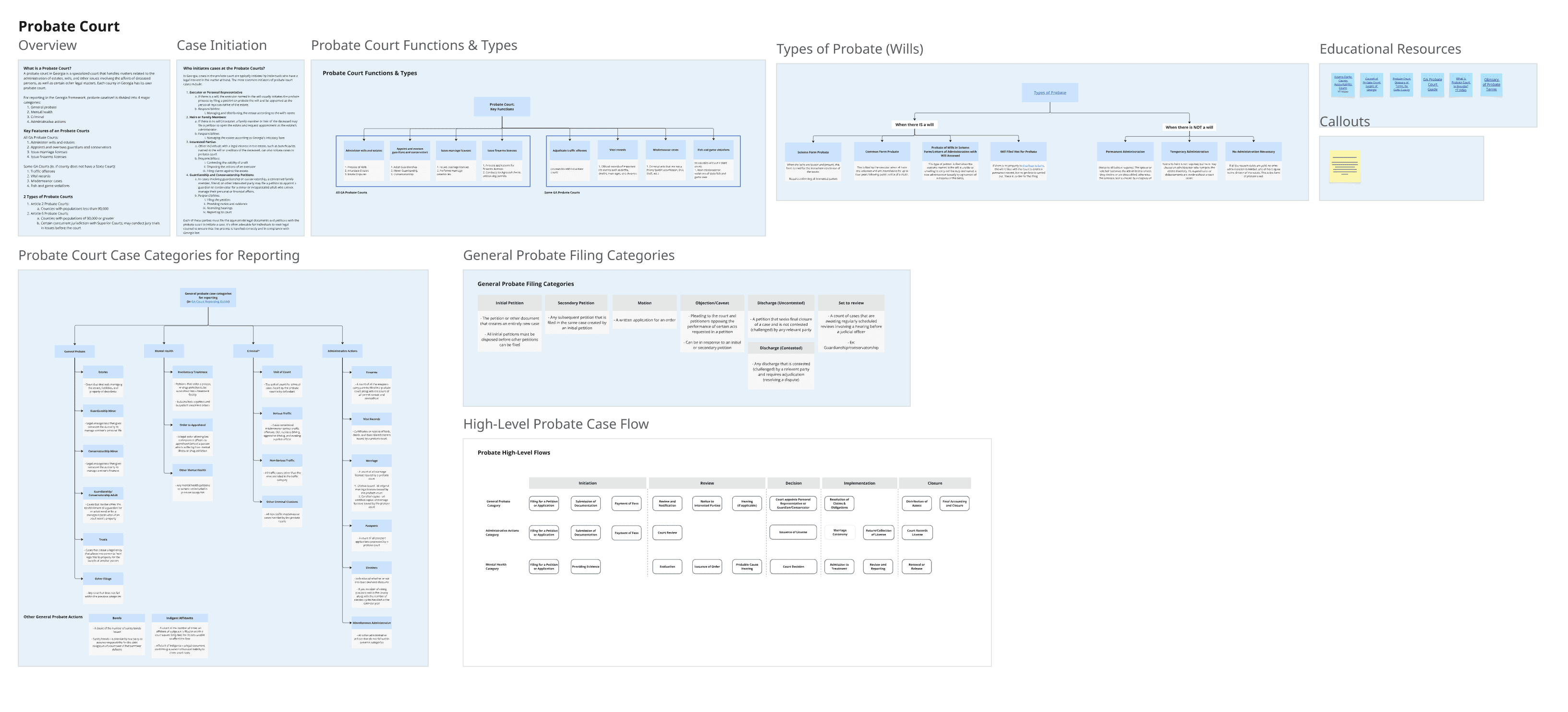
Background research
As a lifelong learner, one of my favorite parts of designing a product in an industry that is new to me is getting to be a student again.
To prep for conversations with judges and court personnel and understand the context of their day-to-day, I dove into research as the Probate Court Experience Lead, leveraging court resources and AI.
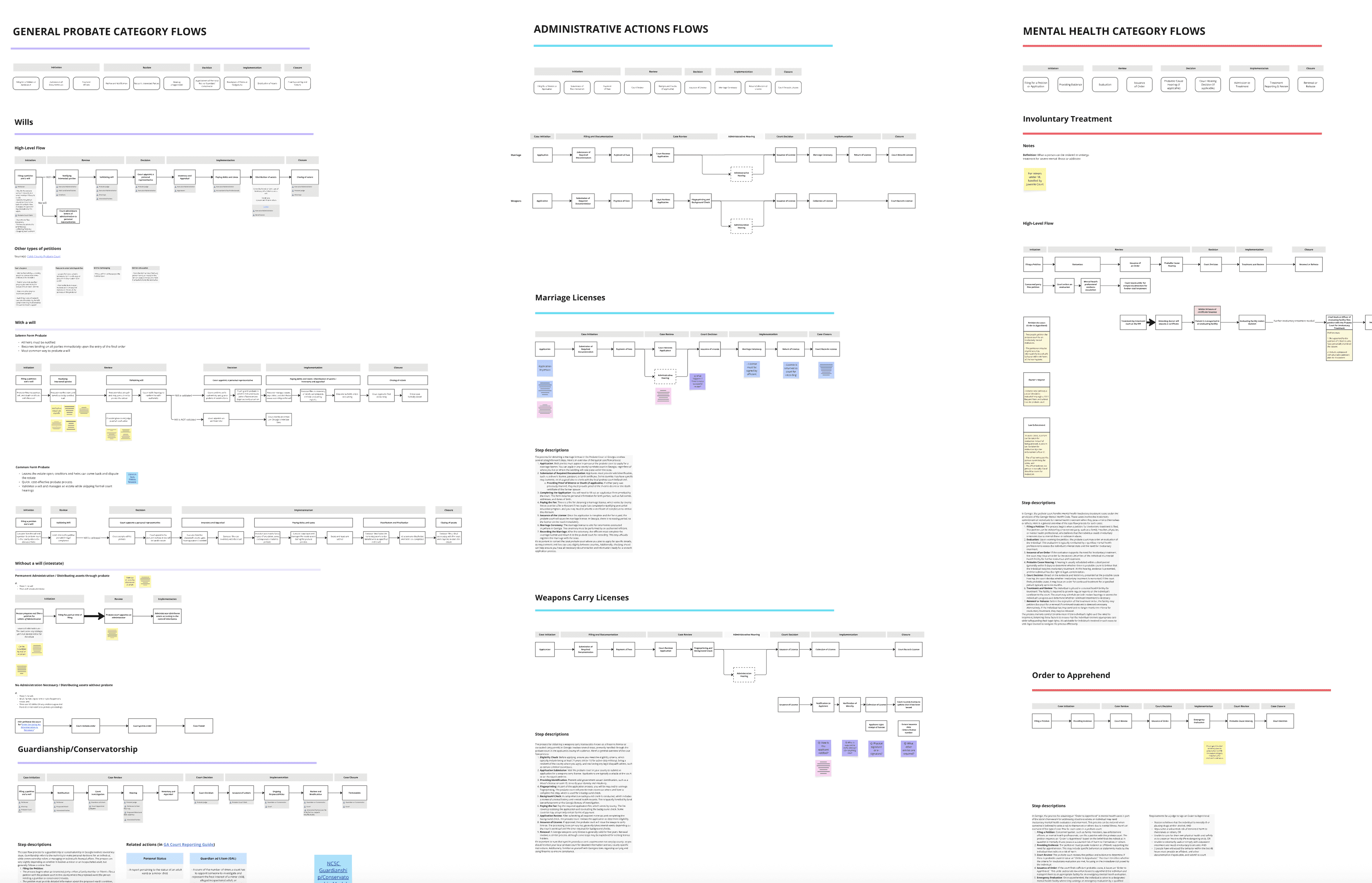
High-level flows
I crafted "Level 1" flows for 4 different Probate case categories to capture common processes and splintering scenarios.
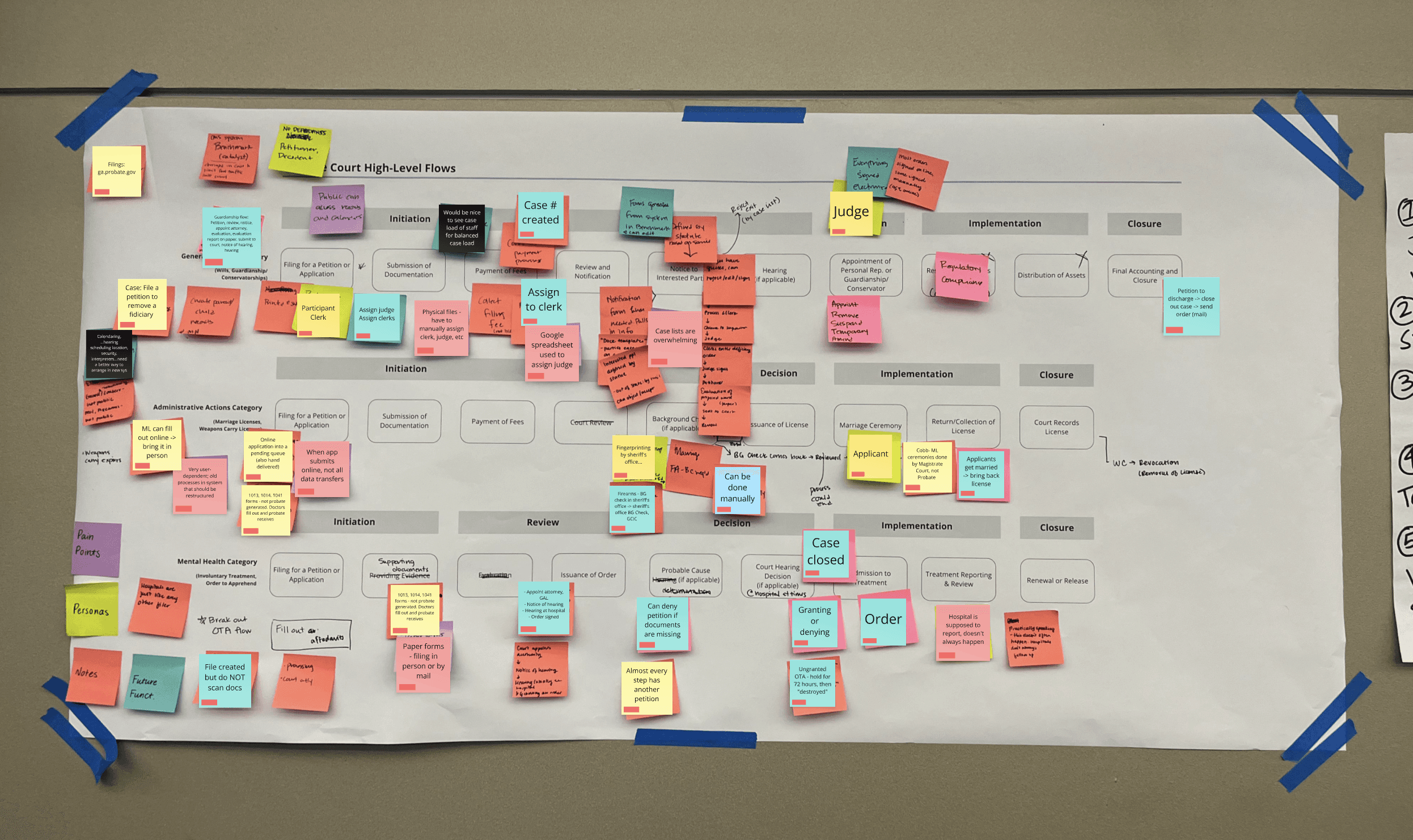
Focus group sessions
The Product Owner and I co-facilitated in-person and virtual focus group sessions with judges and clerks from various counties to capture pain points, gaps in their current systems, and areas of opportunity.
Diving deeper
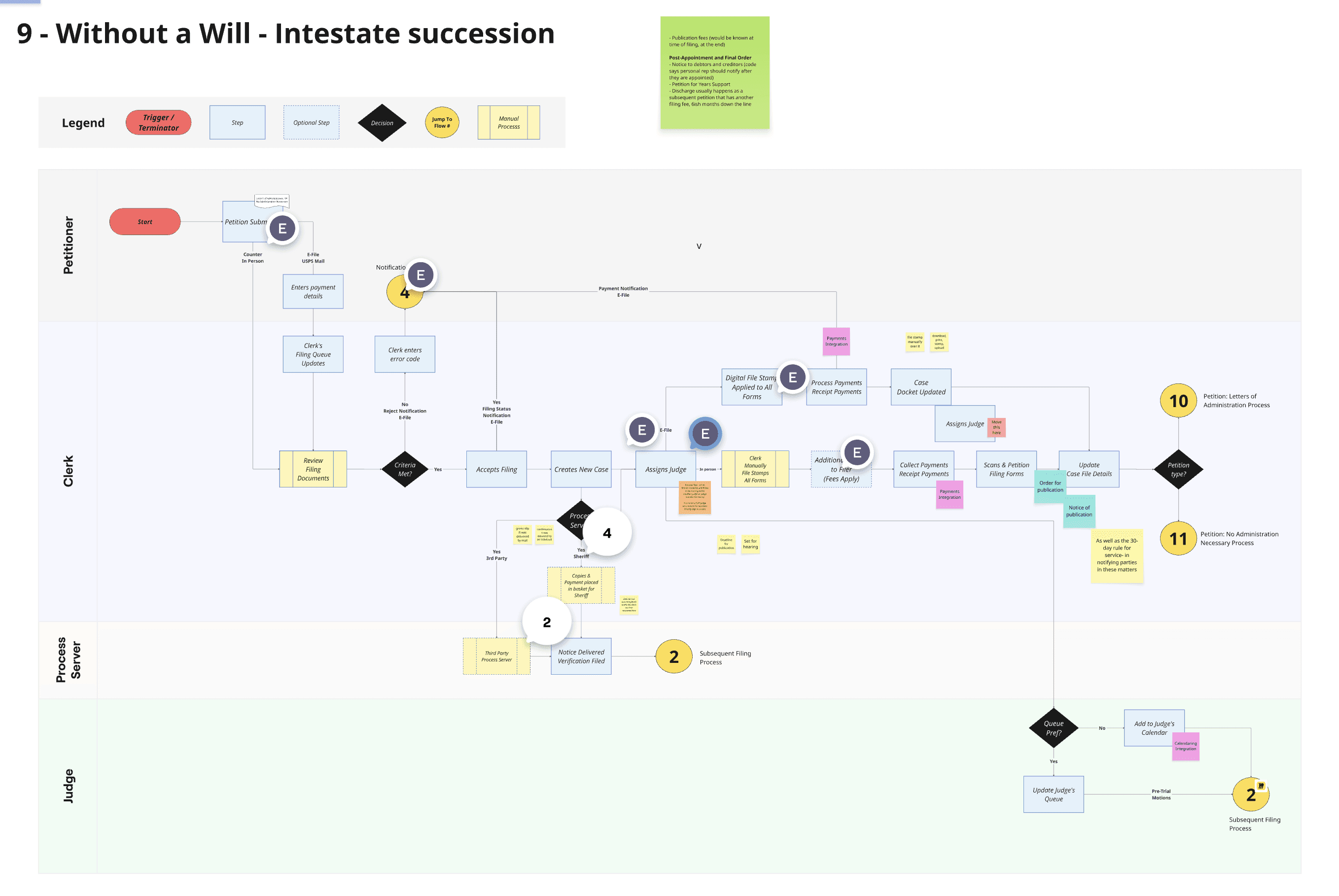
After the focus group sessions, I layered in the findings to create detailed process case flows to identify who is interacting with the CMS and when.
Phase 2: Build
After capturing user needs and requirements from the Discovery phase, we graduated to the Build phase, where we started to develop the system's core services using agile engineering methods.
As the Document Management domain UX lead, I worked tightly with the domain's Product Owners and Software Architects to scope and prioritize features. I also prototyped core functions that touched across domains, such as document upload, management, eSignature, and more.
Exciting content coming soon! Please stay tuned or reach out to me at emme.enojado@gmail.com for more details.
Streamlining document upload & metadata gathering
Impact: By collecting essential information upfront (such as document type, case association, filing party, and relevant dates) the CMS ensures data completeness from the start and reduces downstream errors.
Implementing statuses for efficient workflows
Impact: Document Statuses provides a structured lifecycle workflow that guides documents through distinct phases with automated notifications at each transition. This ensures documents are properly vetted and approved before becoming part of the official case record, while giving users clear visibility into where each document stands in the approval process.
Robust eSignature capabilities & tracking
Impact: Document Signing enables secure electronic signature workflows, allowing users to assign documents to one or multiple recipients for review and signing. The integrated eSign feature supports legally compliant digital signatures, tracks signing progress, and maintains comprehensive audit trails via document versioning.
Let’s stay in touch!